Last Updated: October 30, 2026
Quick Summary
Online therapy is safe and confidential when both therapist and client take the right precautions, but no platform can promise absolute security. Confidentiality rests on three layers: the therapist's professional and legal duties, the security of the platform used, and the practical steps taken in the room where you sit.
- A 2020 JMIR review found privacy, confidentiality and security were the most frequently raised ethical concerns about online psychotherapy.
- Therapists registered with bodies such as the BACP carry ethical obligations to protect what clients disclose.
- Use a private space, avoid public Wi-Fi, and use a password-protected device rather than a shared one.
- Ask directly whether sessions are recorded; reputable practitioners do not record without explicit consent.
- Verify registration with a recognised professional body and ask how the therapist stores notes between sessions.
Table of Contents
- How Online Therapy Confidentiality Actually Works
- Online Therapy Privacy: Practical Steps for a Secure Session
- How to Prepare for Online Therapy
- Choosing a Private Online Therapist in the UK
- Frequently Asked Questions
How Online Therapy Confidentiality Actually Works
Online therapy is safe and confidential when both therapist and client take the right precautions, but no platform can promise absolute security. This guide from Justin Duwe, APC explains what confidentiality covers, where its limits sit, and how to protect your privacy in practice. A 2020 narrative review in the Journal of Medical Internet Research found privacy, confidentiality and security were the most frequently raised ethical concerns about online psychotherapy (EXTERNAL_LINK: Ethical Issues in Online Psychotherapy review | jmir.org). Those concerns are manageable, not disqualifying.
Confidentiality in online therapy rests on three layers: the therapist's professional and legal duties, the security of the platform used, and the practical steps taken in the room where you sit. All three matter.
Therapists registered with bodies such as the BACP carry ethical obligations to protect what clients disclose (BACP Ethical Framework for the Counselling Professions). That duty does not vanish because the session happens through a screen. But it is not unlimited, and understanding the exceptions matters more than assuming total secrecy.
Online Therapy Privacy: Practical Steps for a Secure Session
Privacy in online therapy depends on where you sit, what device you use, and who else can hear you. A few deliberate choices make a real difference.
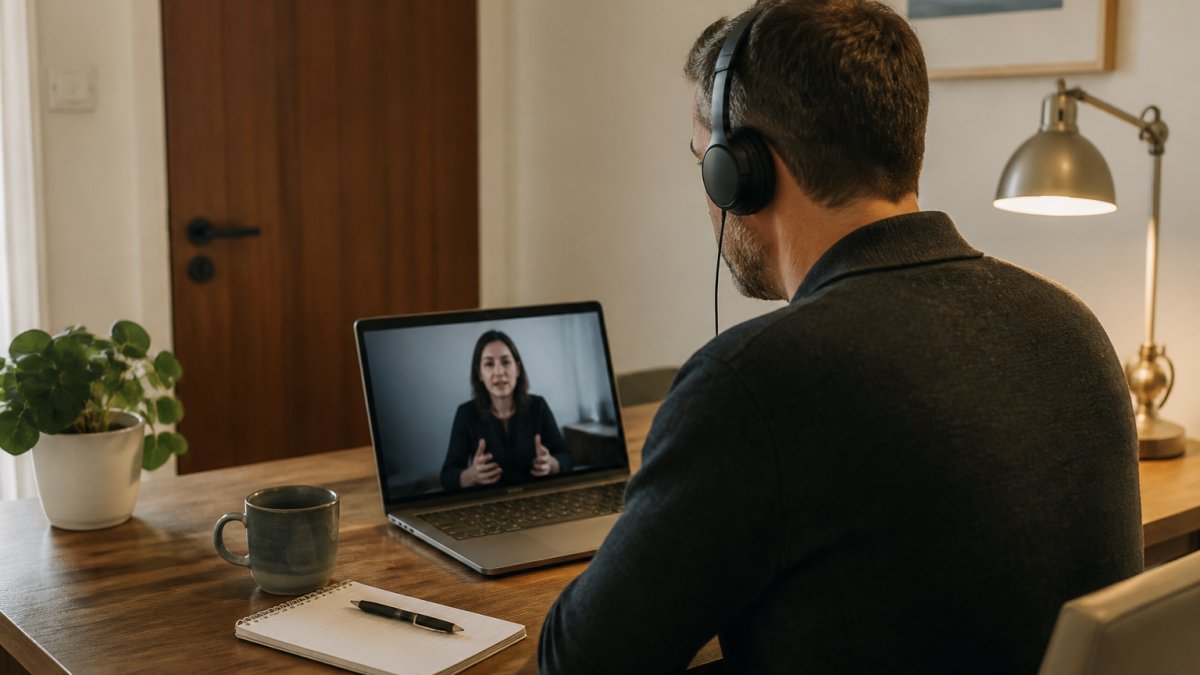
Start with the room. Use a private space where you will not be overheard, and avoid public Wi-Fi for sessions. A home connection or a secure mobile hotspot is safer than café or hotel networks.
- Close the door and use headphones
- Check your device's privacy settings and app permissions
- Use a password-protected device, not a shared one
- Turn off smart speakers and voice assistants nearby
- Confirm the platform your therapist uses and how it handles recordings
Ask directly whether sessions are recorded. Reputable practitioners do not record sessions without explicit consent, and many never record at all. A 2025 study in Frontiers in Psychiatry found 91.52% of therapists saw advantages in online therapy while 87.10% also saw drawbacks (EXTERNAL_LINK: Advantages and disadvantages of online psychotherapy | frontiersin.org). Privacy risk sits among those drawbacks, and it is largely manageable with sensible habits.
A few deliberate choices about your room, device and connection make a real difference to session privacy.
| Step | What to do |
|---|---|
| Choose your room | Use a private space where you will not be overheard |
| Secure your connection | Avoid public Wi-Fi; use home connection or secure mobile hotspot |
| Manage sound | Close the door and use headphones |
| Check your device | Review privacy settings and app permissions |
| Protect access | Use a password-protected device, not a shared one |
| Silence nearby tech | Turn off smart speakers and voice assistants |
| Ask about recordings | Confirm the platform used and how recordings are handled |
How to Prepare for Online Therapy
Preparing for online therapy means treating the session as seriously as an in-person appointment. Set aside uninterrupted time, test your technology beforehand, and think about what you want to bring.
Practical preparation reduces friction and protects the work itself:
- Test your camera, microphone and connection before the first session
- Have a backup plan, such as a phone number, if the video drops
- Keep a notebook for reflections between sessions
- Arrange your space so you are not disturbed mid-conversation
- Be honest with your therapist about any privacy worries
If you are used to managing difficulties alone and presenting a capable exterior, therapy can feel unfamiliar at first. Individual online psychotherapy for high-functioning adults is designed for exactly that experience, and you can read more about therapy for people who are used to being the capable one before deciding whether it fits.
Choosing a Private Online Therapist in the UK
Choosing a private online therapist in the UK comes down to three checks: credentials, jurisdiction, and how the practitioner handles privacy. Verify registration with a recognised professional body, confirm they are qualified to work with you where you are based, and ask how they store notes and communicate between sessions.
Justin Duwe is a BACP-accredited psychotherapist with over 21 years of clinical experience, and his practice is exclusively online, working with individuals and couples. You can read about Justin Duwe and his background before making contact.
Confidential online psychotherapy lets people seek support discreetly. If that matters to you, you can request an appointment.
Frequently Asked Questions
Is online therapy confidential in the UK?
Yes, online therapy can be confidential in the UK. BACP-accredited therapists are bound by professional ethical obligations to protect your privacy, and they use secure platforms for video sessions and record keeping. However, confidentiality has legal limits, such as when there is a risk of serious harm or a court order. It is worth asking your therapist how they protect your information before you begin.
How do therapists protect confidentiality during online sessions?
Therapists protect confidentiality by using encrypted video platforms, secure networks, and private spaces for sessions. They store notes in accordance with data protection rules and do not share information without your consent, except in specific legal circumstances. You can support this by attending from a private room and using a secure internet connection.
How can I have a private therapy session in shared accommodation?
If you live in shared accommodation, plan ahead to protect your privacy. Use headphones, choose a time when flatmates are out or in another room, and consider a white-noise machine or background sound. You could also book a private room at a library or community centre, or use a car with a secure mobile connection. Discuss with your therapist if you need to reschedule due to privacy concerns. Preparing your environment is a key part of how to prepare for online therapy and helps you feel safe enough to speak openly.
Can online therapy sessions be recorded?
Sessions should not be recorded without your explicit consent. Reputable therapists do not record sessions by default, and any recording would require a clear agreement. If you are concerned, ask your therapist about their policy before your first session. You can also check that the platform does not automatically record. Remember that you control your own device, so ensure no other apps are recording. A private online therapist in the UK should be transparent about their data practices and give you confidence in the confidentiality of your sessions.
The challenge is finding a therapist who takes confidentiality as seriously as you do. Justin Duwe, APC offers private online psychotherapy grounded in over two decades of clinical practice, specialist work with addiction and sexual wellbeing, and a discreet, non-judgmental approach. Get started with Justin Duwe, APC and explore support on your own terms.
